

Romantic English
The Lost Language of Heraldic Flowers and Medieval Ornament
The Lost Language of Heraldic Flowers and Medieval Ornament
Couldn't load pickup availability
The Lost Language of Heraldic Flowers and Medieval Ornament
An Illustrated Victorian Guide to Gothic Floral Design, Heraldic Symbols, Medieval Decorative Art, Royal Emblems, Illuminated Motifs, and Old World Ornamentation for Artists, Designers, Craftsmen, Tattooists, Woodcarvers, and Lovers of Ancient Beauty
There are certain books which do not merely sit upon shelves.
They wait.
Patiently. Like old castles beneath ivy. Like locked cabinets in forgotten monasteries. Like ancient banners folded carefully away in cedar chests while centuries pass overhead like drifting weather.
And then, one day, the right reader arrives.
The Lost Language of Heraldic Flowers and Medieval Ornament is precisely such a volume.
To call it an illustrated design book would be rather like calling a cathedral window “coloured glass.” Technically correct, perhaps, but catastrophically insufficient.
This remarkable work is a grand procession of medieval heraldic art, Gothic floral ornament, Victorian decorative design, royal symbolism, illuminated botanical motifs, and ancient European visual storytelling. Every page glows with the sort of craftsmanship modernity rarely permits itself to remember.
Here, lions do not simply roar. They guard bloodlines.
Roses do not merely bloom. They signify dynasties, loyalties, romances, wars, and sacred mysteries.
Leaves twist into symbols. Vines become architecture. Shields transform into myth.
The result is a magnificent treasury for anyone fascinated by heraldic design books, medieval floral illustration, Gothic ornamentation, fantasy emblem design, antique decorative motifs, illuminated manuscript art, or traditional European pattern work.
One scarcely opens the book so much as enters it.
The great Victorian designers understood something many modern creatives have forgotten entirely. Ornament was never superficial. It was language. A visual poetry spoken through beasts, flowers, geometry, colour, and sacred proportion.
A single heraldic stag could communicate courage, lineage, territorial claim, spiritual devotion, and political allegiance all at once.
Today we call this branding.
Our ancestors called it meaning.
Within these richly illustrated pages, readers will uncover a breathtaking collection of:
• Medieval heraldic symbols and royal emblems
• Gothic floral ornament and botanical decorative design
• Victorian ornamental pattern studies
• Illuminated manuscript inspired motifs
• Heraldic lions, gryphons, dragons, eagles, and mythical beasts
• Decorative shield forms and ceremonial insignia
• Traditional European border ornament and scrollwork
• Gothic revival design inspiration for artists and makers
• Historical floral symbolism in medieval and Renaissance art
• Intricate examples of antique ornamental composition
The beauty of this book lies not only in what it shows, but in what it awakens.
One begins to notice things differently afterwards.
A wrought iron gate suddenly resembles a page from a forgotten manuscript. The carved stone above an old church doorway reveals hidden botanical symmetry. The curling acanthus leaves upon antique furniture no longer appear decorative alone, but alive with lineage and intention.
Sir David Attenborough might describe it as one of civilisation’s most fascinating evolutionary behaviours: the human impulse to transform survival into beauty. To carve memory into objects. To turn identity into symbol. To leave traces of ourselves within pattern and ornament long after our voices have vanished.
And vanish they do.
Empires fall. Kingdoms disappear. Names fade.
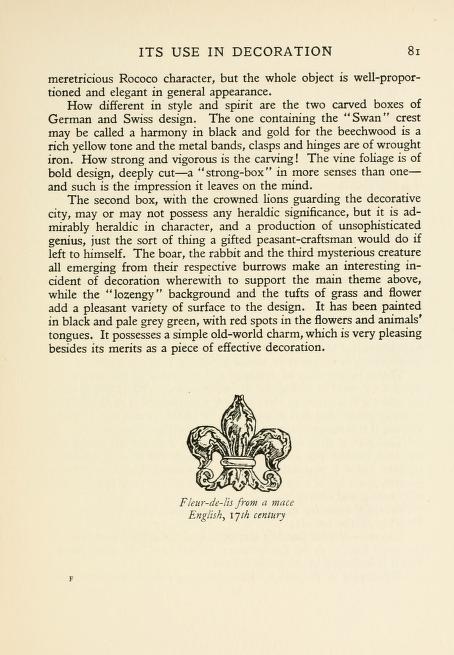
Yet somehow, a carved fleur-de-lis survives.
A painted shield survives.
A vine curling around a medieval capital survives.
Like fossils pressed gently into the sediment of history.
This is why artists, fantasy illustrators, tattoo designers, woodworkers, calligraphers, bookbinders, set designers, game creators, and heraldic enthusiasts return endlessly to books such as this. It does not offer disposable trends. It offers roots.
Deep ones.
For those seeking authentic medieval design inspiration, antique heraldic illustration references, Gothic floral pattern books, or Victorian ornament resources for creative projects, this volume becomes not merely useful, but inexhaustible.
Its pages are crowded with visual treasures.
Crowned beasts poised upon banners.
Floral labyrinths unfolding with hypnotic rhythm.
Sacred geometry concealed within ornamental balance.
Decorative initials worthy of illuminated abbeys.
Royal insignia echoing with forgotten dynasties.
And perhaps most enchanting of all, there exists throughout the work a curious atmosphere of old-world wonder. One feels guided by some candlelit storyteller seated beside the hearth of an ancient hall, speaking softly of wandering craftsmen, monastic scribes, wandering heralds, and master carvers who once carried these symbols across Europe like fragments of shared mythology.
Jim Henson understood that stories become immortal when wrapped in texture, mystery, and archetype. This book possesses precisely that quality. It feels discovered rather than manufactured. Unearthed rather than printed.
Even the floral studies possess astonishing intelligence.
These are not botanical copies rendered mechanically from nature. They are nature translated through imagination. Leaves simplified into rhythm. Flowers transformed into architecture. Vines disciplined into harmony and movement.
David Ogilvy often insisted that true elegance in design comes from clarity married to enchantment. This collection achieves exactly that rare union. The motifs feel majestic yet usable. Noble yet practical. Ancient yet startlingly modern for contemporary creators working in branding, fantasy art, luxury packaging, tattoo composition, artisan woodworking, book cover design, or historical decorative arts.
Indeed, one could build entire creative worlds from these pages alone.
A fantasy kingdom.
A noble house.
A luxury fragrance identity.
A medieval inspired clothing line.
A dark academia publishing brand.
A heraldic logo system.
A carved furniture collection.
An illuminated tarot deck.
The possibilities unfold endlessly because the source material itself emerged from centuries of accumulated artistic wisdom.
And unlike fleeting modern design trends which expire with exhausting speed, these forms endure because they were born from archetypes older than fashion itself.
There is also, quietly hidden beneath all the splendour, something deeply restorative about this book.
To study ornament carefully is to slow down.
To observe.
To notice proportion, repetition, symmetry, symbolism, rhythm, detail.
In an age addicted to speed, this becomes almost radical.
One cannot rush beauty of this kind.
One must wander through it.
And that, perhaps, is the true gift waiting inside these pages.
Not simply inspiration.
But re-enchantment.
For collectors of antique design books, lovers of medieval aesthetics, admirers of Gothic floral art, seekers of historical ornament references, and creators longing to restore grandeur and symbolism to their work, The Lost Language of Heraldic Flowers and Medieval Ornament is nothing less than a master key to a forgotten visual kingdom.
The banners are stirring once more.
The lions wake.
The roses unfurl.
The old symbols are waiting patiently to speak again.
Open the book and enter the hall of emblems before the candlelight fades.
Share