

Romantic English
The Lost Language of Beauty: A Collector’s Guide to Egyptian, Greek, Gothic, and Saracenic Ornament for Designers, Historians, and Lovers of Timeless Interiors
The Lost Language of Beauty: A Collector’s Guide to Egyptian, Greek, Gothic, and Saracenic Ornament for Designers, Historians, and Lovers of Timeless Interiors
Couldn't load pickup availability
There are books one reads, and then there are books one consults—quietly, repeatedly, with a sense that something within their pages is not merely informative, but formative. Analysis of Ornament: The Characteristics of Styles by Ralph Nicholson Wornum belongs most assuredly to the latter.
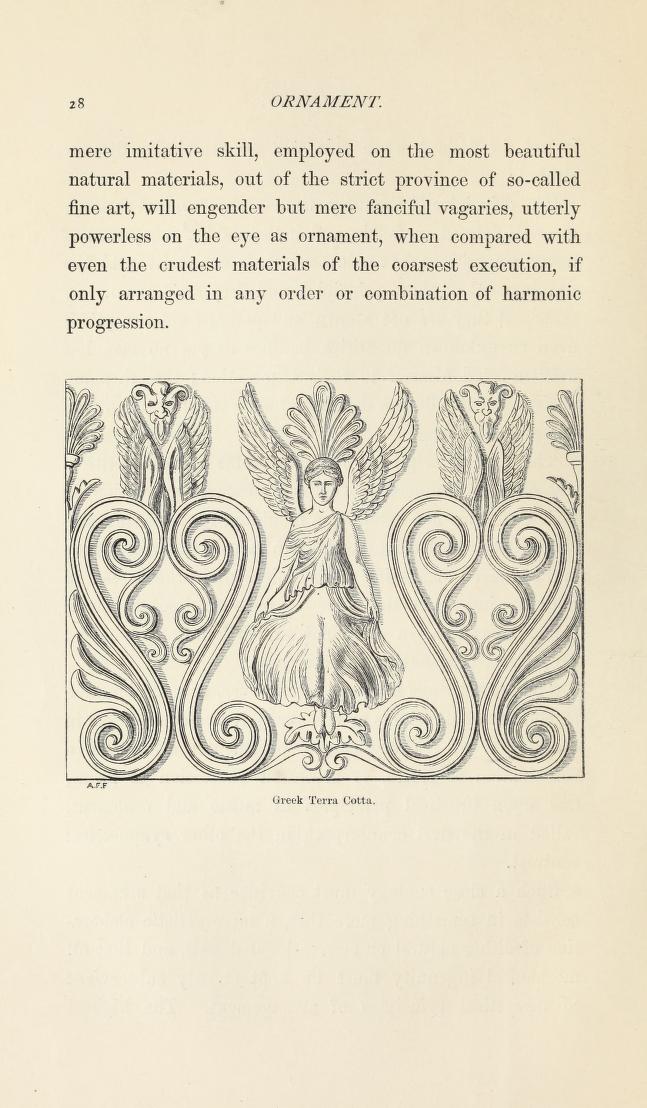
Imagine, if you will, stepping into a grand library where every civilisation has left behind its signature—not in words, but in pattern. Egyptian lotus borders whisper of eternity and divine order. Greek meanders speak with poised restraint and mathematical grace. Gothic tracery rises heavenward, full of fervour and spiritual ambition. And then, with almost hypnotic serenity, Saracenic geometry unfolds—endless, intricate, and profoundly meditative.
Wornum does not merely show you these styles. He reveals their inner logic.
This is not a picture book. It is a masterclass.
Originally conceived as a series of lectures for the Government Schools of Design, this work was intended to train the eye and discipline the hand. And it still does—beautifully, rigorously, and with a quiet authority that modern design texts rarely dare to possess.
Here, ornament is treated not as decoration, but as a language governed by principles:
- repetition as rhythm
- structure as foundation
- stylisation as refinement
- culture as identity
You begin to see that what appears ornamental is, in truth, intellectual architecture—a system of beauty refined across centuries.
For the designer, it is a revelation.
For the collector, a compass.
For the aesthete, a kind of awakening.
And for those shaping interiors—particularly those drawn to classical European aesthetics, museum-inspired décor, or the quiet authority of historical design—it becomes indispensable. One does not simply decorate after reading Wornum. One composes.
This is the sort of volume that sharpens judgment. It teaches you why certain rooms feel effortless, why certain patterns endure, and why others—however fashionable—fade into irrelevance.
If you have ever looked at a tapestry, a frieze, a border, or a repeating motif and felt there was something more beneath the surface… this book gives you the key.
And once you have it, you will never look at design the same way again.
Now then—if you are prepared to elevate your taste, refine your eye, and step into the lineage of designers who understood beauty not as chance, but as craft—
Acquire your copy today.
Study it. Return to it. Let it shape your work.
Because in a world awash with decoration, true ornament—the kind that endures—is exceedingly rare.
And this is where it begins.
Share